From 6 Sorters to 1: Inside a Pecan Line's X-Ray Upgrade
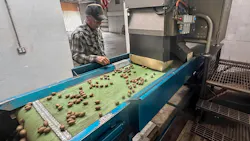
Payne's Pecans is catching product defects it couldn't see before and getting paid more for it.
The family-owned business in Rich Hill, Missouri, processes up to 2 million lb (907,000 kg) of in-shell pecans a year for local growers. Last year, founder Jay Payne installed WECO's Multiscan MXV-Bulk X-ray inspection system, becoming the first operation in North America to use it for pecans. The goal is to catch hidden defects, cut down on hand sorting, and keep up with buyers who've gotten pickier about quality.
Why It Matters
MXV-Bulk X-Ray Features:
- Analyze internal density to detect defects
- Identify empty shells, insect damage, and mold
- Remove stones, glass, ceramics, and embedded metal
- Touchscreen-set density threshold for accept/reject tolerance
- Configurable fill-zone inspection for different varieties and quality targets
- Belt-based product stabilization for consistent scanning
- Automated air-valve ejection of out-of-tolerance product
Optical sorters catch what's on the outside—color, size, shape, surface condition. They can't see what's inside the shell. The MXV-Bulk analyzes density differences to flag insufficient kernel fill and internal defects, and it also picks out dense foreign material like stones before product leaves the facility.
"What surprised me most is what the system can detect that we simply couldn't see before," Payne said. "You can pick a pecan out of the reject stream, look at it and think there's nothing wrong with it. Then you crack it open and find there's little or no good nutmeat inside."
How It Works
At Payne's facility, the MXV-Bulk sits near the end of the line, positioned after pre-cleaning equipment has already stripped out lightweight debris and obvious foreign material. A channel belt keeps pecans stable and evenly distributed as they pass through the inspection zone, where the system reads X-ray images in real time and fires air valves to eject anything out of tolerance.
Payne says day-to-day operation has been simple despite the technology behind it. Once the pecan settings were dialed in, he's rarely had to adjust them, and daily maintenance amounts to wiping down the accessible belt—no technical staff required.
A lot of people hear X-ray and assume it's going to be complicated, but we just turn it on and go to work.
- Jay Payne, Founder, Payne's Pecans
The Payoff in Numbers
- Average grade increased from 40 to 44—worth 8 cents more per pound at 2 cents per grade point.
- A-grade lots now run under 1% lower-grade contamination, versus the 2 to 3% the industry typically accepts.
- Throughput is up 2,000 to 3,000 lb (907 to 1,361 kg) per hour.
- Hand-sorting crew shrank from 6 to 8 people down to one.
"A machine evaluates every pecan the same way every time," Payne said. "People get tired, and different people catch different things. Buyers who have bought from me for years told me it was the best product they had seen come out of here."
Who It's For
Food processors, particularly nut, fruit and produce operations, dealing with labor shortages and buyers who grade on internal quality, not just appearance. Payne says the system hasn't required specialized staff to run, as settings were dialed in once, and daily upkeep is mostly wiping down the belt.
About the Author
Laura Davis
Editor-in-Chief, New Equipment Digest
Laura Davis is the editor in chief of New Equipment Digest (NED), a brand part of the Manufacturing Group at EndeavorB2B. NED covers all products, equipment, solutions, and technology related to the broad scope of manufacturing, from mops and buckets to robots and automation.
Laura has been a manufacturing product writer for nine years, knowledgeable about the ins and outs of the industry, along with what readers are looking for when wanting to learn about the latest products on the market.