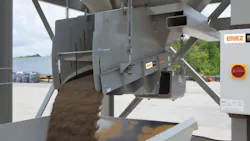
6 Design Factors That Could Be Harming Your Feeder Performance
Feeder performance problems often get blamed on the feeder itself, but a new white paper from Eriez points to a less obvious culprit: the hopper transition where material exits the hopper and enters the feeder tray.
In the paper, "Optimizing Hopper Transitions: Design Guidelines for Maximum Hopper-to-Feeder Performance," author and Eriez Global Product Manager–Vibratory Clay O'Dana walks through the design variables that determine whether a vibratory feeder can actually hit its rated capacity, including throat sizing, gate height, wall geometry, and clearance requirements. The paper also breaks down three common transition configurations and the tradeoffs of each, giving plant engineers and equipment operators a practical framework for diagnosing and correcting flow issues before they cause downtime or premature wear.
What's Inside:
- The Importance of Transition Design
- Throat Opening
- Gate Height
- Hopper Opening Width
- Hopper Wall Configuration
- Structural Clearance
- Skirtboards
- Typical Hopper Transitions
- Flat Tray Transition
- Tubular or Covered Tray Transitions
- Transitions Without Hopper or Material Column Above Tray