Trener Robotics Acteris Platform Brings Pre-Trained Physical AI Skills to Industrial Robots
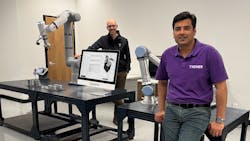
Trener Robotics is rolling out a new approach to industrial robot programming—replacing rigid, line-by-line coding with pre-trained Physical AI skills designed for real-world production environments.
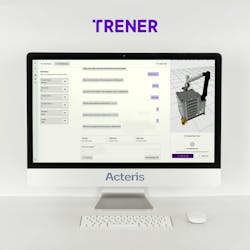
Backed by a $32 million Series A round, the company's Acteris platform layers software-defined intelligence onto existing industrial robots, allowing operators to describe tasks in their own words and convert conversational input into executable automation. The funding, co-led by Engine Ventures and IAG Capital Partners with participation from Cadence and Geodesic Capital through Nikon's NFocus Fund, brings the company’s total funding to more than $38 million. The capital will support expansion into new markets, additional AI model training for new robot processes, and scaling its team.
By replacing procedural programming with pre-trained AI skills, we give robots the ability to understand and act with true intelligence learned from data extracted from humans, robots, and videos of industrial processes.
- Dr. Asad Tirmizi, co-founder and CEO of Trener Robotics
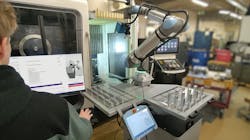
The platform's first target application is robotic CNC machine tending, with additional applications planned for 2026.
For manufacturers, Acteris delivers:
- A natural-language, agentic user interface that allows operators to control robots through conversation, task sequencing, and simulation—without deep robotics expertise.
- Part identification and handling, even in variable or adverse conditions.
- Motion optimization that reacts to changes on the fly.
- Collision avoidance and safety functions designed to mimic human-like judgment.
- Real-time production dashboards for performance tracking.
The company is also positioning Acteris as a scalability tool for system integrators. More than 15 integration partners across the U.S. and Europe are offering turnkey Acteris-powered systems that bundle robot, gripper, and software into pre-integrated packages. The platform is currently compatible with ABB, Universal Robots, and FANUC robots, with additional brands planned.
By standardizing robot and application logic, Acteris aims to reduce programming time, shorten deployment cycles, and convert custom, one-off automation projects into repeatable solutions. For integrators, that translates into faster project timelines and more predictable outcomes; for end users, it means a more modern operator experience and quicker time to value.
The company enters the market as demand for flexible automation continues to climb. The segment is growing at a 14.3% CAGR, driven by labor shortages, rising operating costs, and the need to support high-mix production. Trener Robotics has already drawn interest from machine tool OEMs and hardware manufacturers exploring embedded AI-driven automation.
Recent recognition includes the Machine Tool Innovation Award at EMO Hannover and selection as a winner in the ABB AI Startup Challenge for advancements in natural language programming, skill learning, and autonomous decision-making.
With Acteris, Trener Robotics is betting that pre-trained AI skill models—not traditional programming—will define the next generation of robot operations on the factory floor.
About the Author
Laura Davis
Editor-in-Chief, New Equipment Digest
Laura Davis is the editor in chief of New Equipment Digest (NED), a brand part of the Manufacturing Group at EndeavorB2B. NED covers all products, equipment, solutions, and technology related to the broad scope of manufacturing, from mops and buckets to robots and automation. Laura has been a manufacturing product writer for eight years, knowledgeable about the ins and outs of the industry, along with what readers are looking for when wanting to learn about the latest products on the market.