XELA Robotics Upgrades uSkin Sensors with Metal Handling, High-Speed Communication
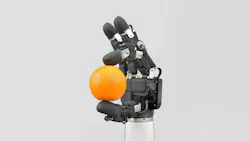
Tactile sensing gives robots capabilities that force or vision sensors alone typically can't match—and XELA Robotics, which has been developing tactile sensor hardware and software since 2018, has announced two updates to its uSkin sensor family targeting industrial robot applications.
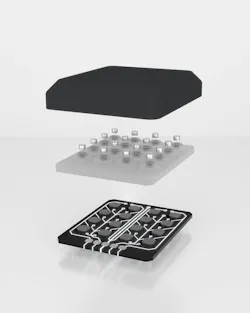
The uSkin line debuted at CES 2026, giving robots a 3D sense of touch to detect contact forces, object shapes, and subtle movements within a grasp. Each sensor module uses a soft elastomer and a chip that measures 3D displacement individually at multiple points.
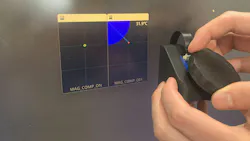
The first is magnetic interference compensation—an improvement over a prior add-on that removed most magnetic interference but fell short with strong, small magnets in close proximity to the sensors. The updated capability removes complex interference from nearby magnets and ferromagnetic materials, making the sensors viable for handling iron and other metals in factory environments, as well as parts like magnetic clips.
The second update adds CAN FD (Controller Area Network Flexible Data-Rate) support. The protocol increases data transfer rates to up to 8 Mbps and expands frame payloads from 8 to 64 bytes, allowing more sensor modules to run on the same data line without a drop in frequency. The result is reduced risk of sensor overload when multiple sensing points are contacted simultaneously. With CAN FD, the sensors deliver 500 Hz measurements across a wider range of form factors.
The uSkin sensors are designed to integrate with parallel grippers, adaptive grippers, custom end-effectors, and existing robotic hands, reducing the engineering effort typically required to add tactile sensing to deployed systems.
"The U.S. is a critical market for us, and we've been listening closely to what our customers there need," said Alexander Schmitz, CEO, XELA Robotics. "Further reducing magnetic interference and supporting more sensors on a robotic hand or gripper without sacrificing frequency were high on the list. These enhancements answer those requests directly, and they will benefit our customers across Asia and Europe as well."
CAN FD-enhanced sensors are available for immediate ordering, with first deliveries scheduled for May 2026. Magnetic interference compensation will be available in Q3 2026.
Both new sensor capabilities will be on display at the upcoming Robotics Summit & Expo, May 27-28, booth 616 in Boston, Mass.
About the Author
Laura Davis
Editor-in-Chief, New Equipment Digest
Laura Davis is the editor in chief of New Equipment Digest (NED), a brand part of the Manufacturing Group at EndeavorB2B. NED covers all products, equipment, solutions, and technology related to the broad scope of manufacturing, from mops and buckets to robots and automation. Laura has been a manufacturing product writer for eight years, knowledgeable about the ins and outs of the industry, along with what readers are looking for when wanting to learn about the latest products on the market.