U.S. Government Commits $500M to Build Domestic Rare Earth Processing Facility
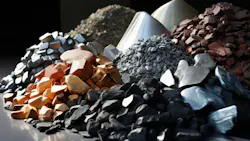
America's manufacturers depend on rare earth metals to build motors, magnets, sensors, drives, and defense systems, and most of those materials are currently refined overseas. A new $1 billion initiative aims to change that.
The U.S. Department of War's Office of Strategic Capital (OSC) has conditionally committed $500 million in long-term debt financing to Phoenix Tailings, a Burlington, Mass.-based company, to fund construction of what it's calling the Freedom Facility—a large-scale rare earth separation and metallization plant targeting initial operations in 2028.
What the Facility Will Do
The Freedom Facility is designed to process a range of feedstocks—including mine concentrates, recycled materials, and secondary sources—and produce both light and heavy rare earth metals. Those metals feed into the components that power advanced manufacturing, energy infrastructure, consumer technology, and defense systems.
The midstream processing step, which converts raw feedstock into usable metals, is currently the weakest link in the domestic rare earth supply chain. The U.S. has feedstock producers and downstream manufacturers, but very little refining capacity at home. Phoenix Tailings is positioning the Freedom Facility to fill that gap, serving mines, recyclers, manufacturers, and government customers alike.
"By creating a midstream facility like this, we are empowering virtually every part of the market and rebuilding the rare earth sector as a truly collaborative industry," said Anthony Balladon, Co-Founder and Chief Commercial Officer of Phoenix Tailings. "We will ensure end customers get access to the rare earth metals they urgently need, while helping mines and recyclers get up and running by purchasing their output, which would otherwise have to move through other nations."
Why It's Happening Now
Current rare earth refining relies heavily on overseas processing, which OSC Director David A. Lorch described as a critical shortage area. "Supporting domestic processing for critical minerals and rare earths is a key focus for OSC," Lorch said. "The rare earth midstream processing capabilities that Phoenix Tailings represents are key shortage areas that need to be rapidly addressed. We are pleased to support Phoenix Tailings in building the Freedom Facility, which will represent an important step in strengthening the full mine-to-magnet supply chain in the United States."
Phoenix Tailings says its processing platform differs from traditional methods by using advanced chemistry, industrial hardware, and digital infrastructure to reduce public health risks, worker safety hazards, and energy costs associated with conventional rare earth refining.
What It Could Mean for Manufacturers
A domestic rare earth supply chain would give U.S. manufacturers more reliable access to the materials that go into permanent magnets, electric motors, and precision components—reducing exposure to geopolitical disruptions that have historically created price volatility and supply shortages. Whether the Freedom Facility delivers on that promise depends on Phoenix Tailings hitting its 2028 operational target and clearing the remaining financial, legal, and technical due diligence required before the OSC loan reaches final close.
"Every team member at Phoenix Tailings understands the responsibility entrusted to us," said Nicholas Myers, Co-Founder and CEO. "This mission is bigger than any one company. It is about strengthening American industry, securing critical supply chains, and ensuring our nation has the resources it needs to thrive."
About the Author
Laura Davis
Editor-in-Chief, New Equipment Digest
Laura Davis is the editor in chief of New Equipment Digest (NED), a brand part of the Manufacturing Group at EndeavorB2B. NED covers all products, equipment, solutions, and technology related to the broad scope of manufacturing, from mops and buckets to robots and automation. Laura has been a manufacturing product writer for eight years, knowledgeable about the ins and outs of the industry, along with what readers are looking for when wanting to learn about the latest products on the market.